Solutions · Spinal cord injury

Spinal cord
injury

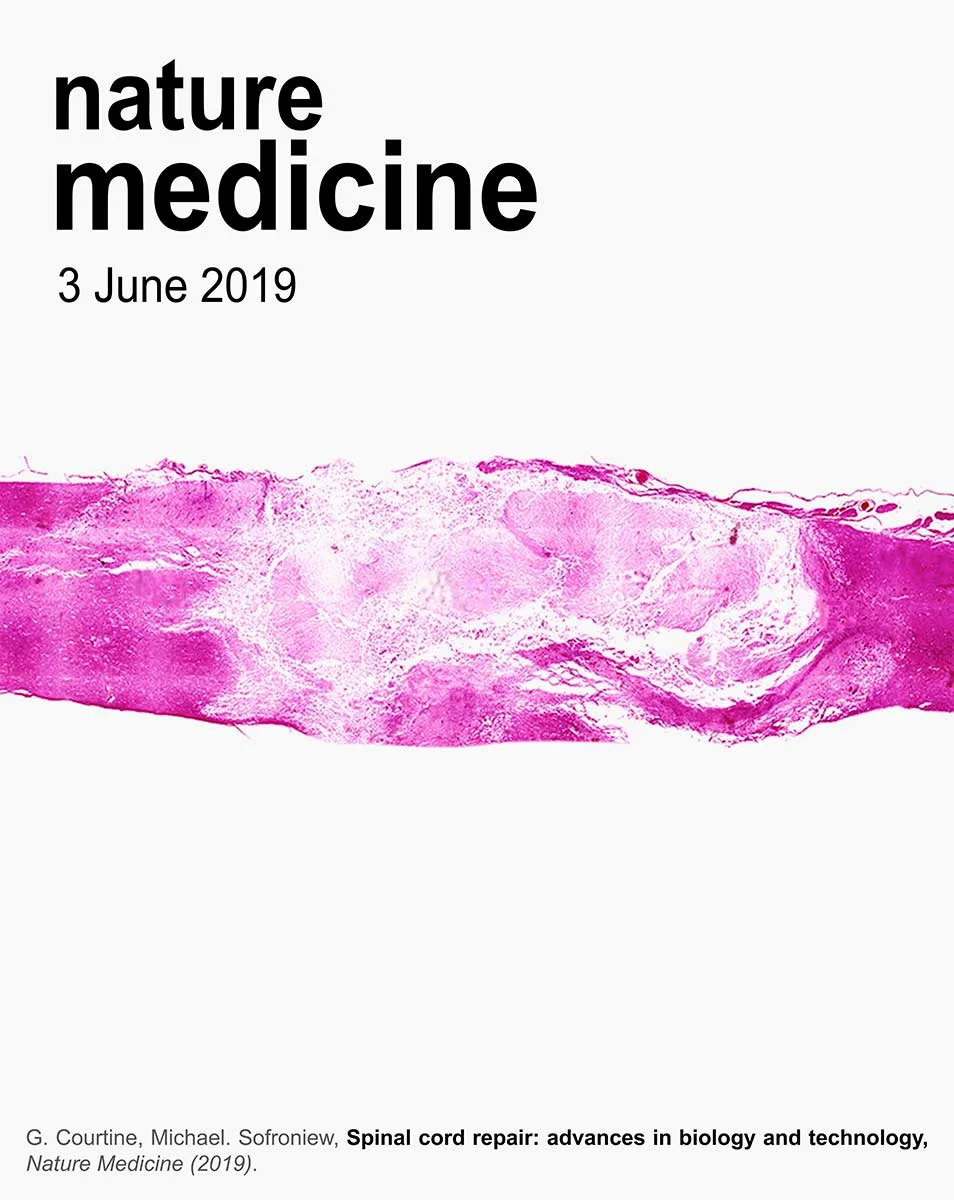
Developing new treatments for spinal cord injury, and working towards a cure.

The programme

Two clinical studies,
one idea.

Targeted epidural stimulation reactivates the spinal cord below the injury. A brain–spine interface adds a digital bridge, so the intention to move can drive that stimulation.

2018

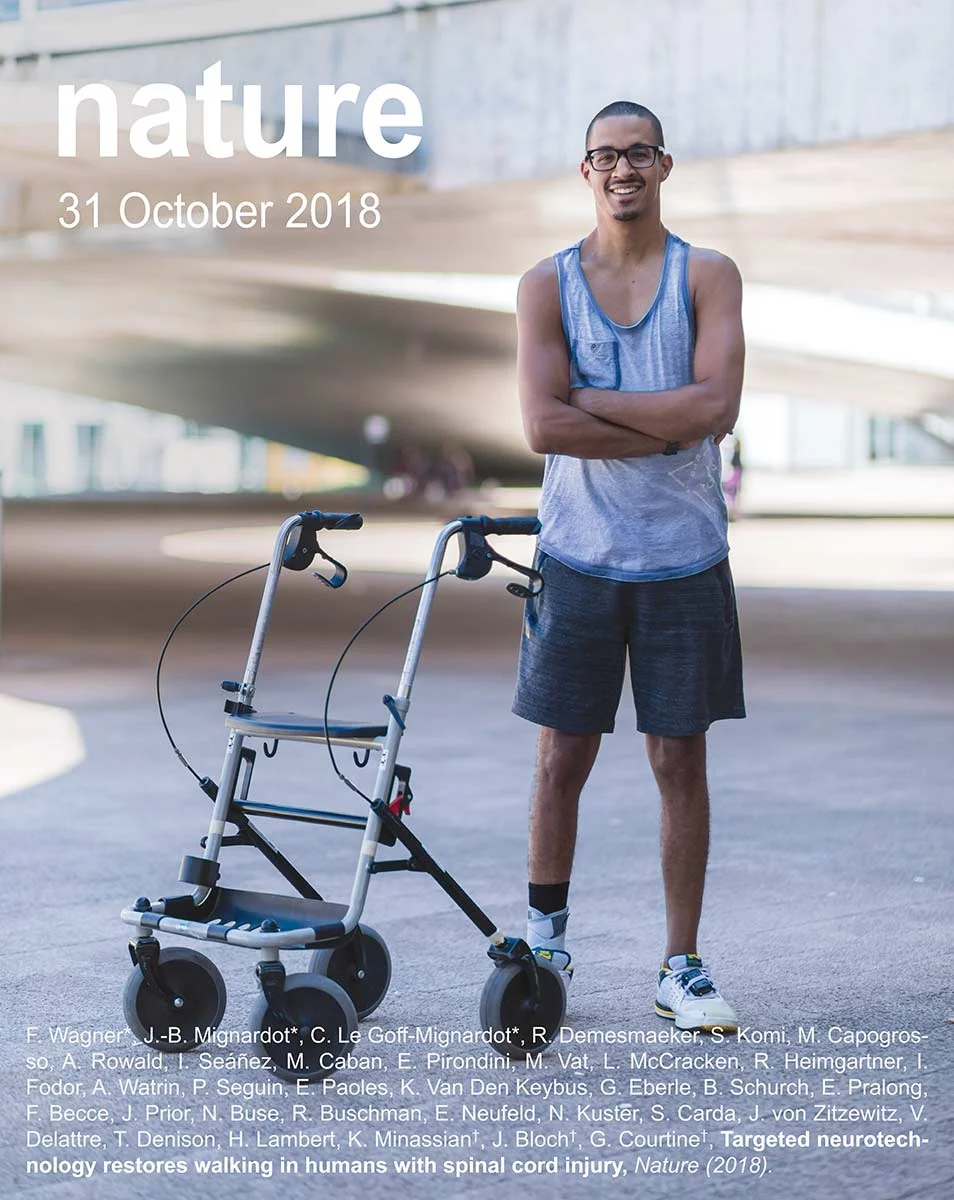
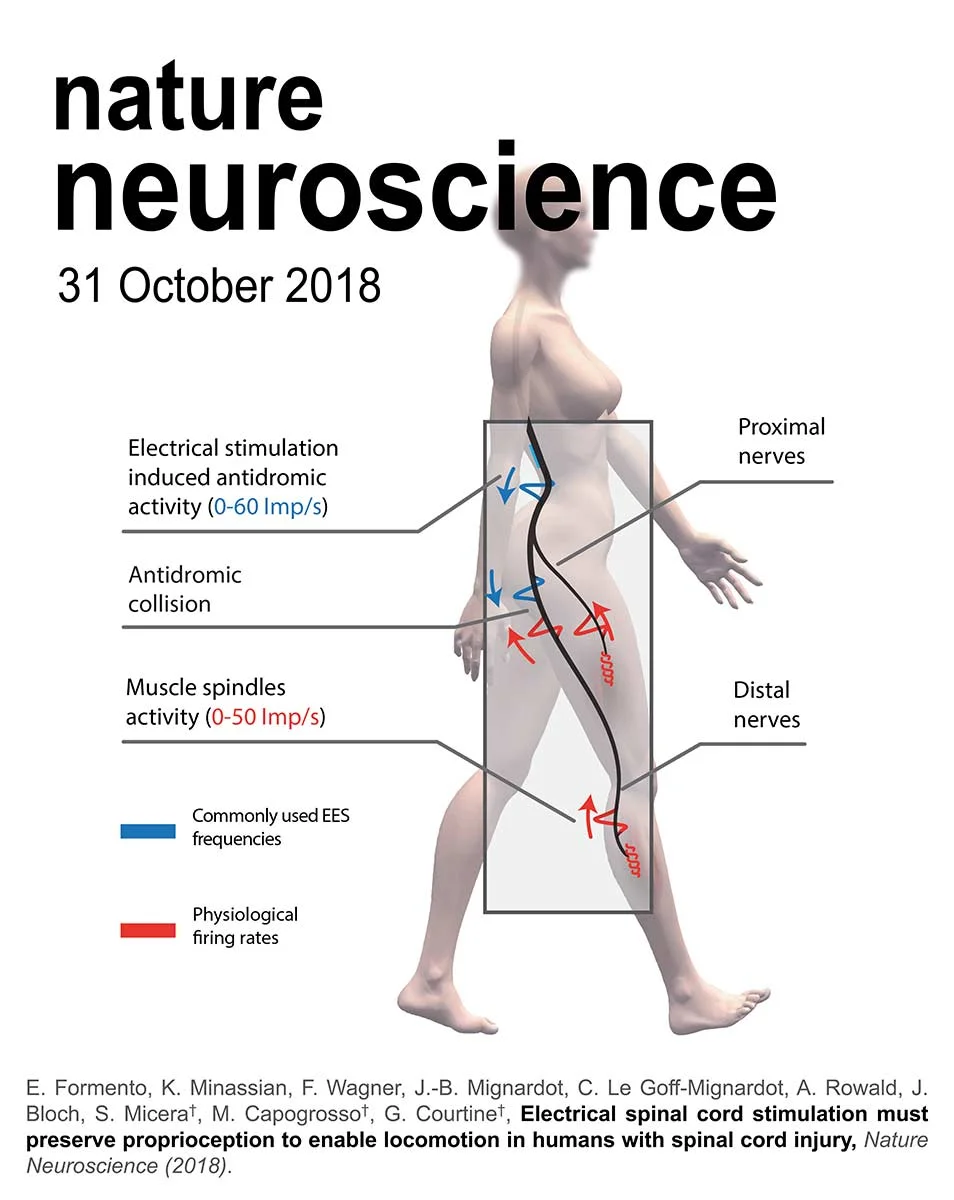
People with chronic paralysis walk again with targeted epidural stimulation — Nature.

2023

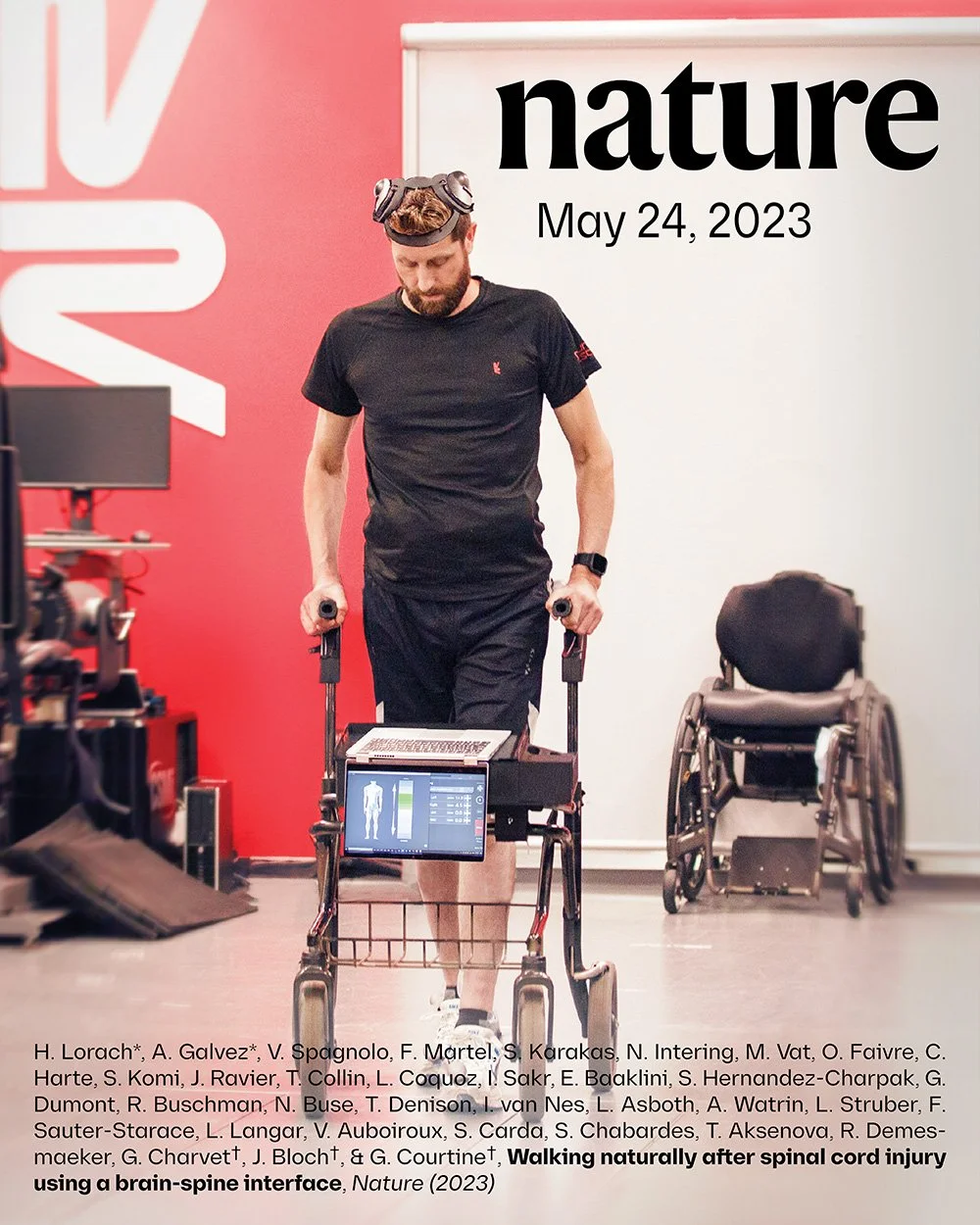
A brain–spine interface restores natural walking after spinal cord injury — Nature.

2

Clinical studies at CHUV: STIMO and the Brain–Spine Interface.

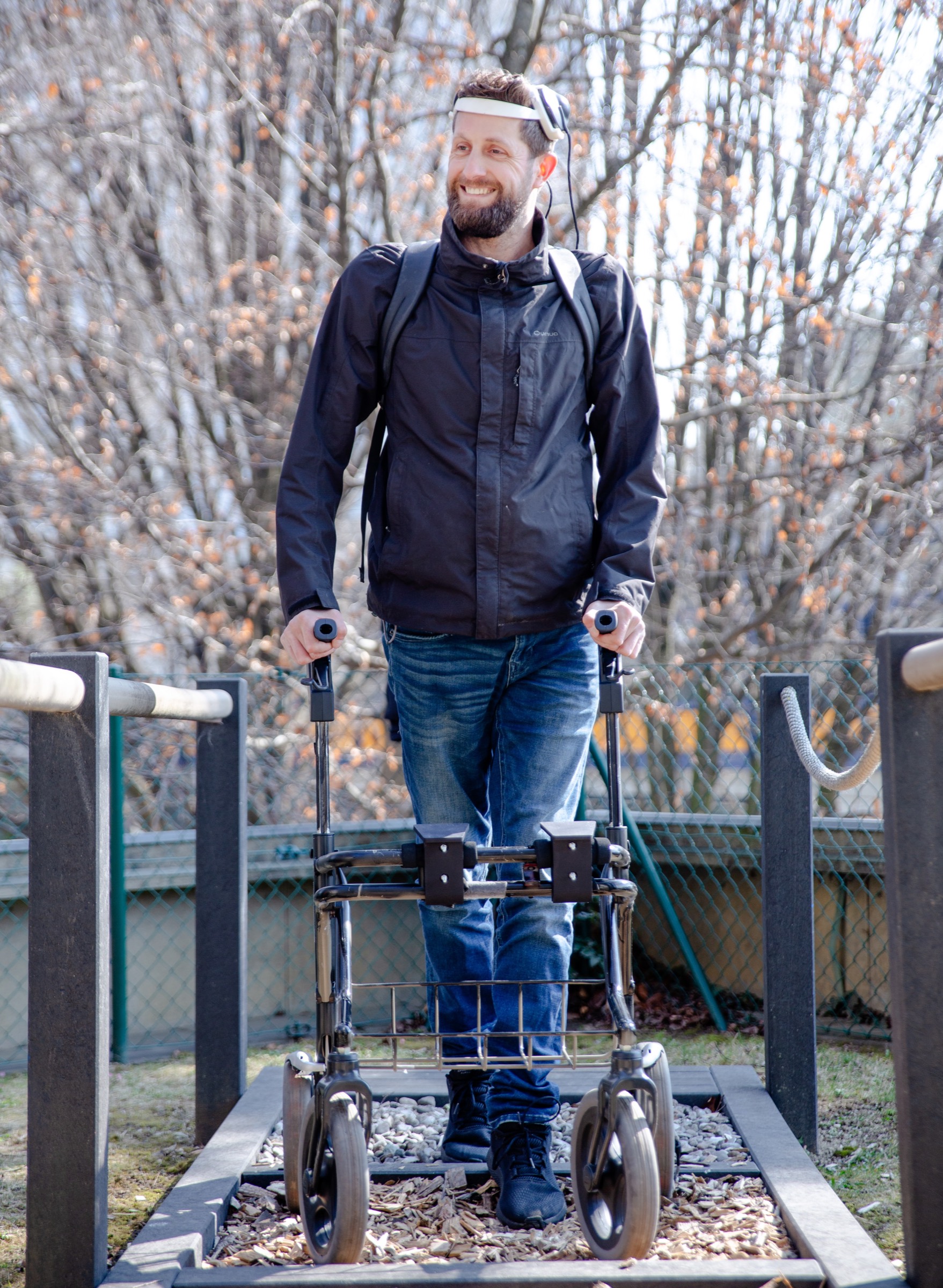
A participant walking with targeted epidural spinal stimulation

Clinical feasibility study

STIMO

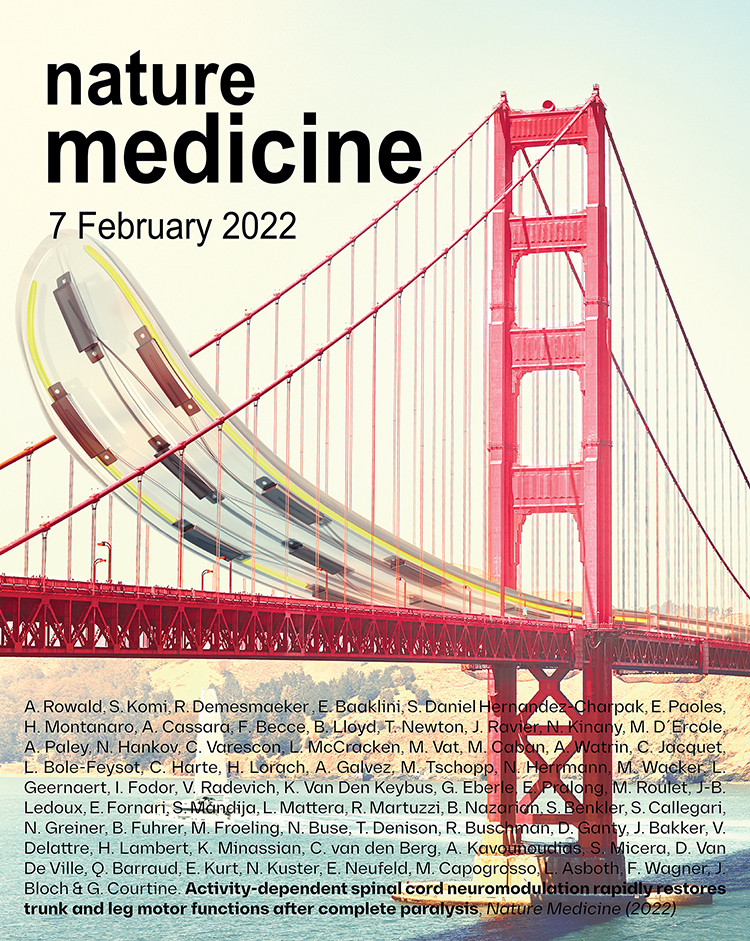
We are conducting a clinical feasibility study called STIMO (“STImulation Movement Overground”), which aims to restore motor functions in people with chronic spinal cord injury. An implantable pulse generator delivers bursts of electrical stimulation at specific locations over the spinal cord, with a timing that coincides with the intended leg movements.

This Targeted Epidural Spinal Stimulation (TESS) reactivates the spinal cord below the injury and amplifies the residual commands from the brain. TESS immediately restores stepping in people with severe spinal cord injury. Combined with robot-assisted gait rehabilitation, it improves neurological recovery, even when the stimulation is switched off. We will soon extend this approach to patients in the acute phase, in a multicentric clinical study.

How it works

  1. Bursts of stimulation at specific locations over the spinal cord
  2. Timed to coincide with the intended leg movements
  3. Recovery that can remain after stimulation is switched off
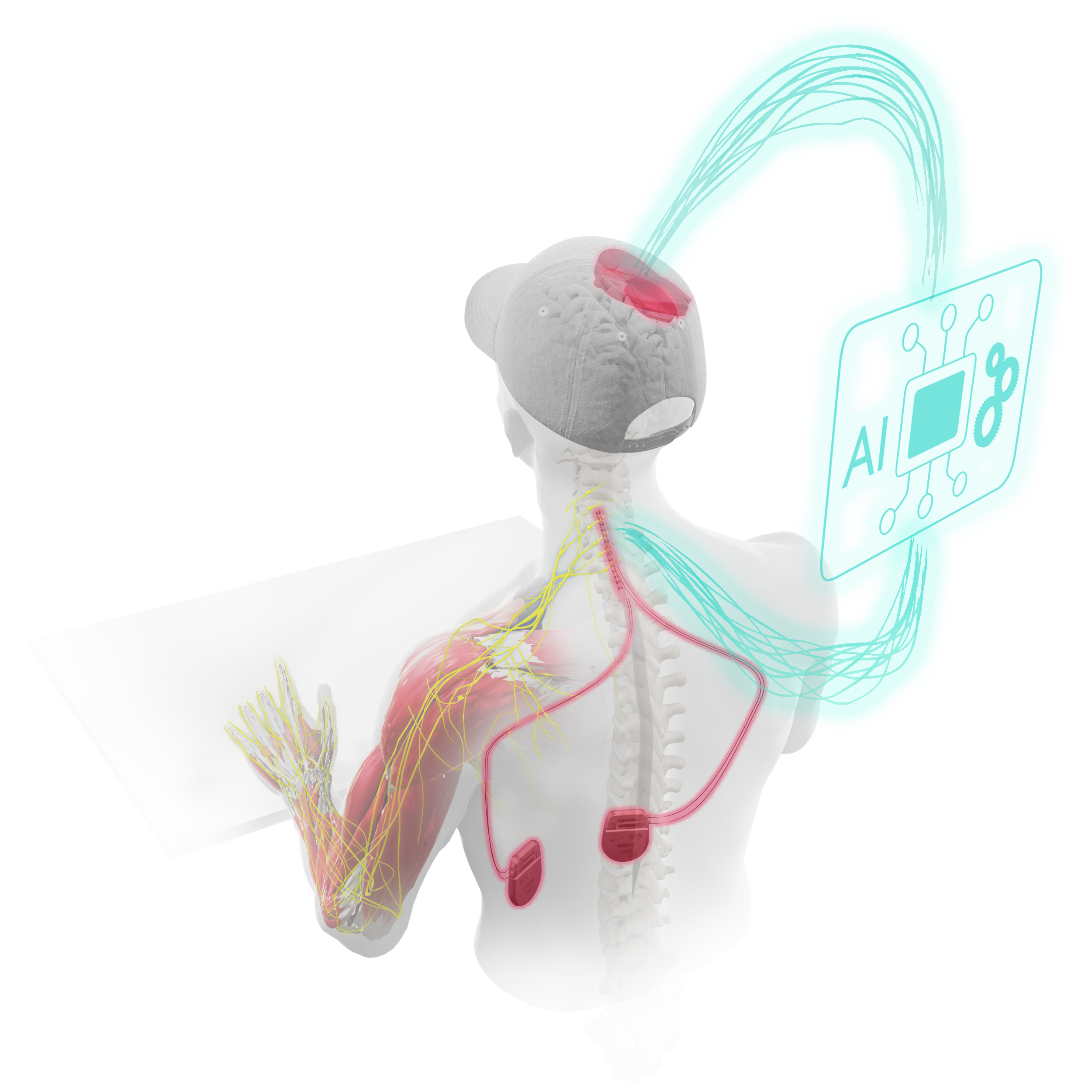
Illustration of a digital bridge between brain and spinal cord

Clinical study

Brain–spine interface

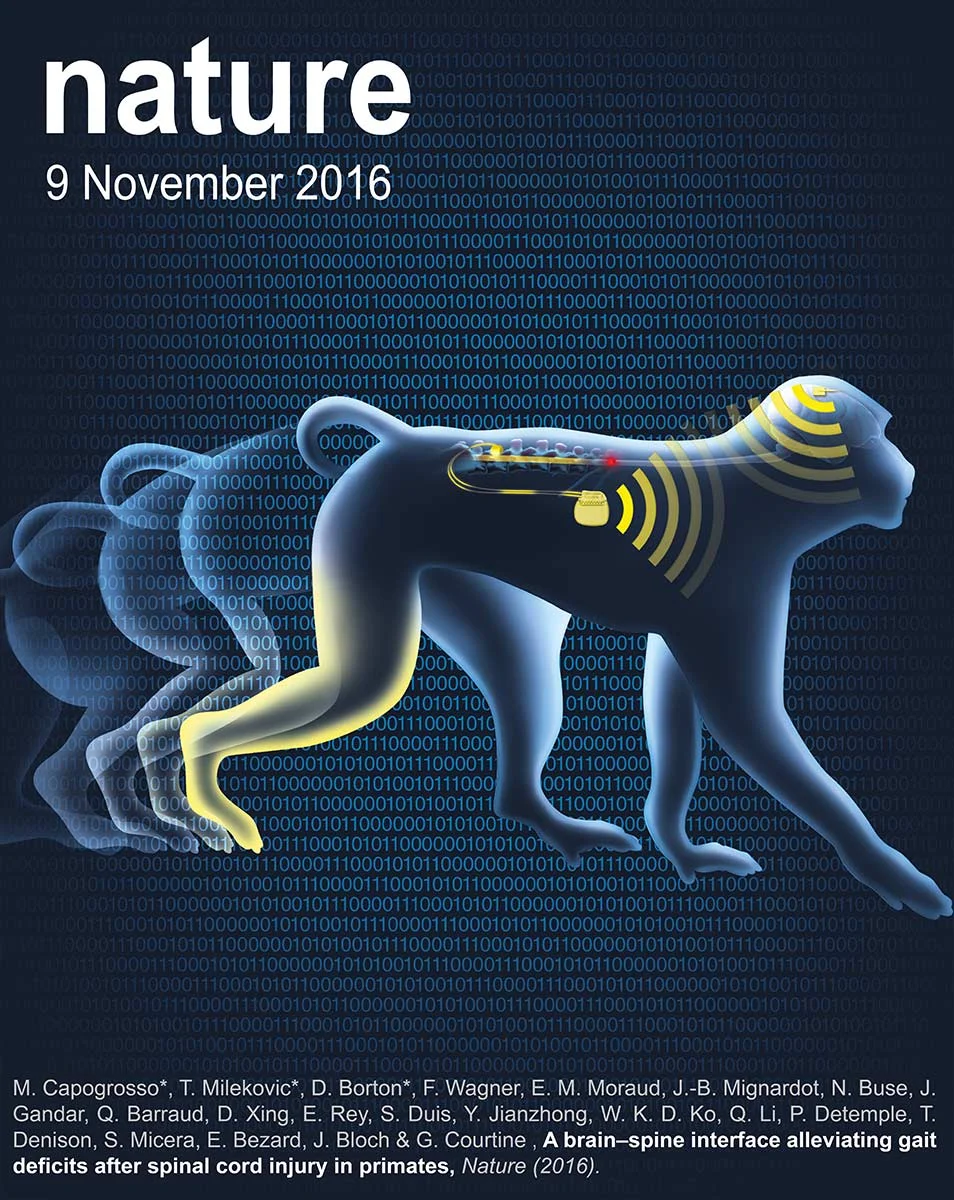
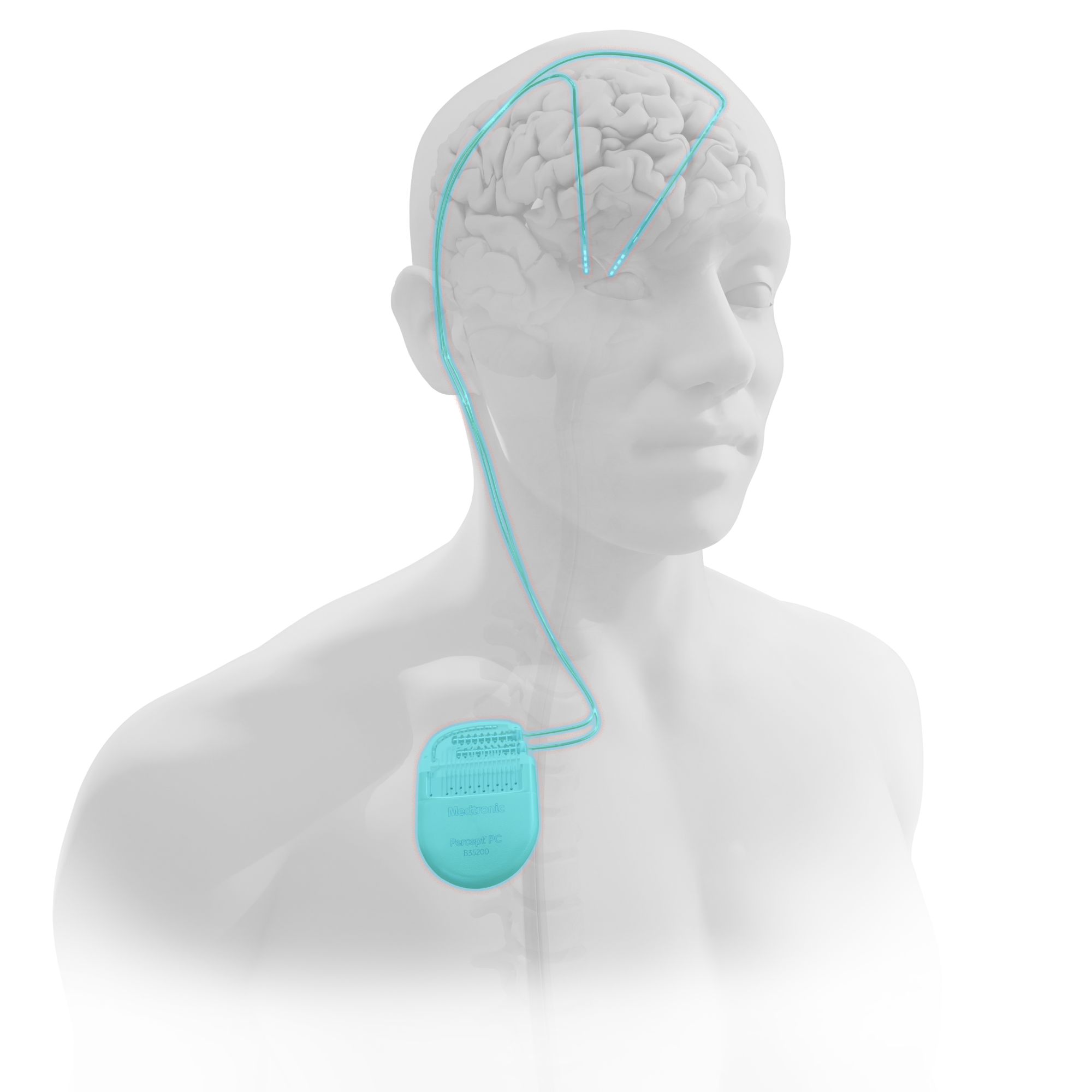
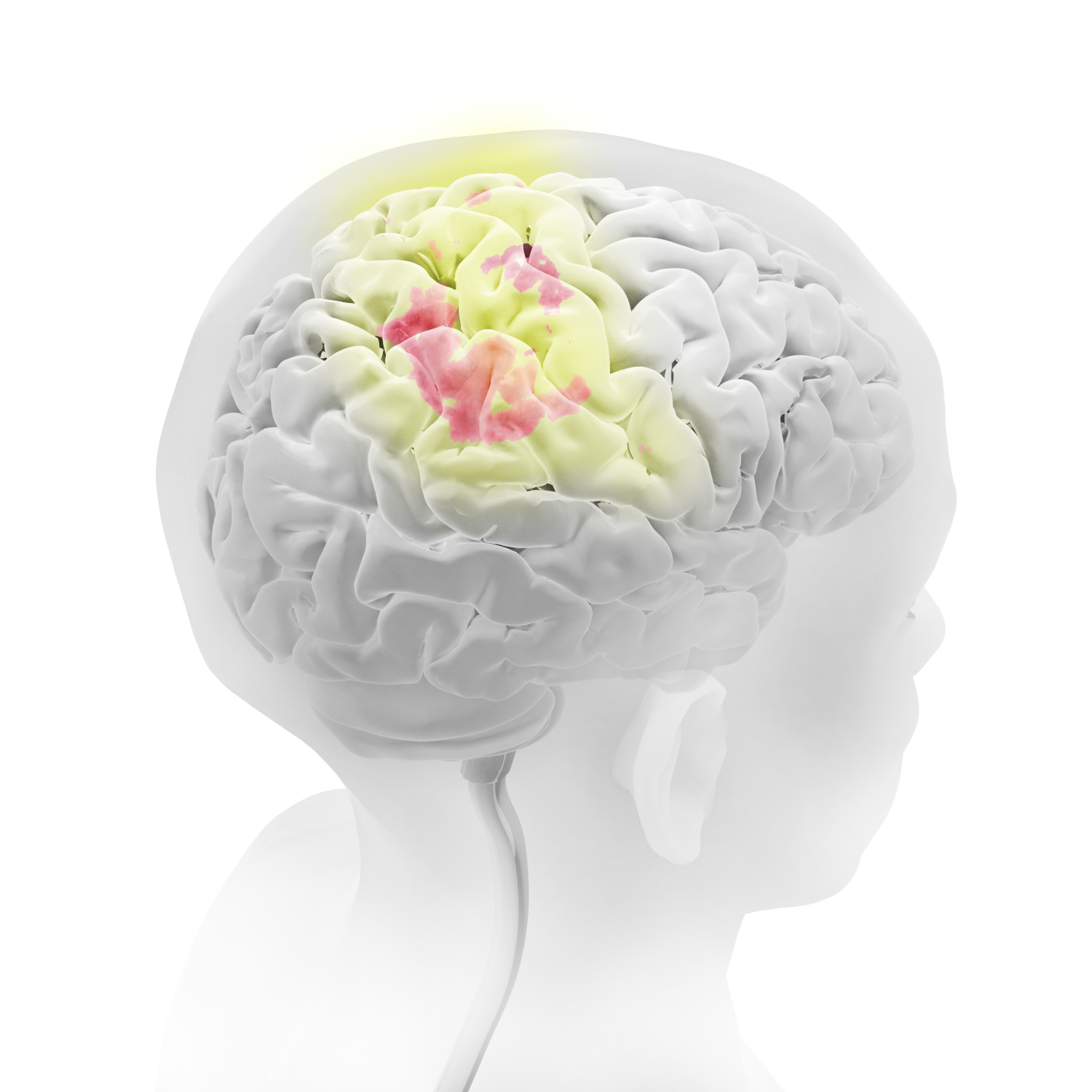
This project aims to establish a digital bridge between the brain and the spinal cord in order to restore motor control of paralysed limbs after spinal cord injury. Using brain recording techniques such as electroencephalography (EEG), electrocorticography (ECoG) and intracortical recordings, it is possible to decode motor intentions and translate them into TESS protocols that promote the intended movement.

The approach was first shown in primates (Nature, 2016). In 2023, the same digital bridge restored natural walking in a person with paralysis (Nature).

How it works

  1. EEG, ECoG or intracortical recordings capture the intention to move
  2. That intention is decoded
  3. It is translated into a TESS protocol that promotes the intended movement

Clinical trials

Join our waiting list

Register as a candidate to be contacted if you are eligible for one of our ongoing or upcoming spinal cord injury studies.