Solutions · Parkinson’s disease

Parkinson’s
disease

Alleviating gait and balance deficits in people with Parkinson’s disease.

The programme

Everyday movement,
closed-loop stimulation.

We decode the dynamics of brain and spinal circuits during movement, then translate that map into stimulation protocols that alleviate gait and balance deficits.

2023

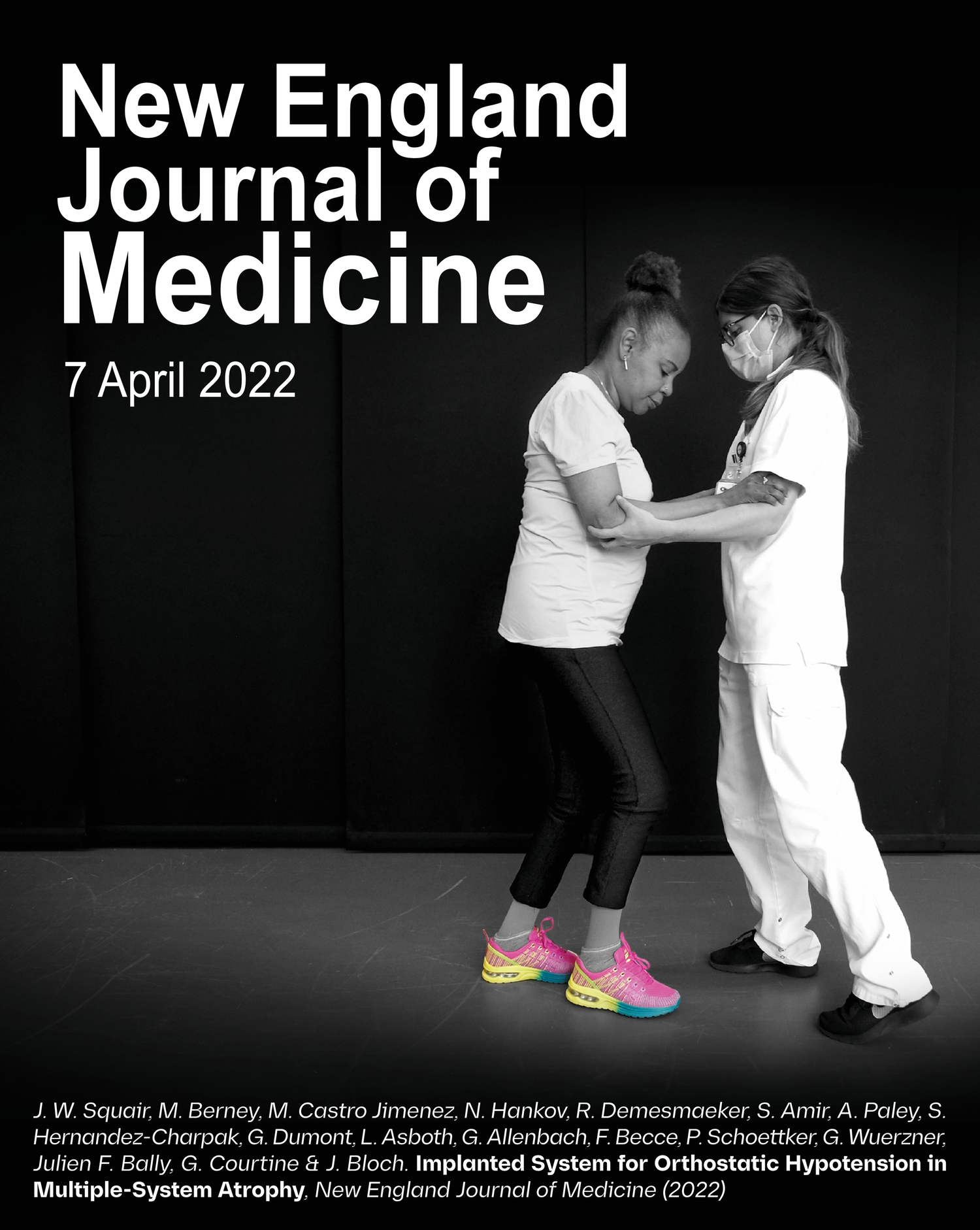
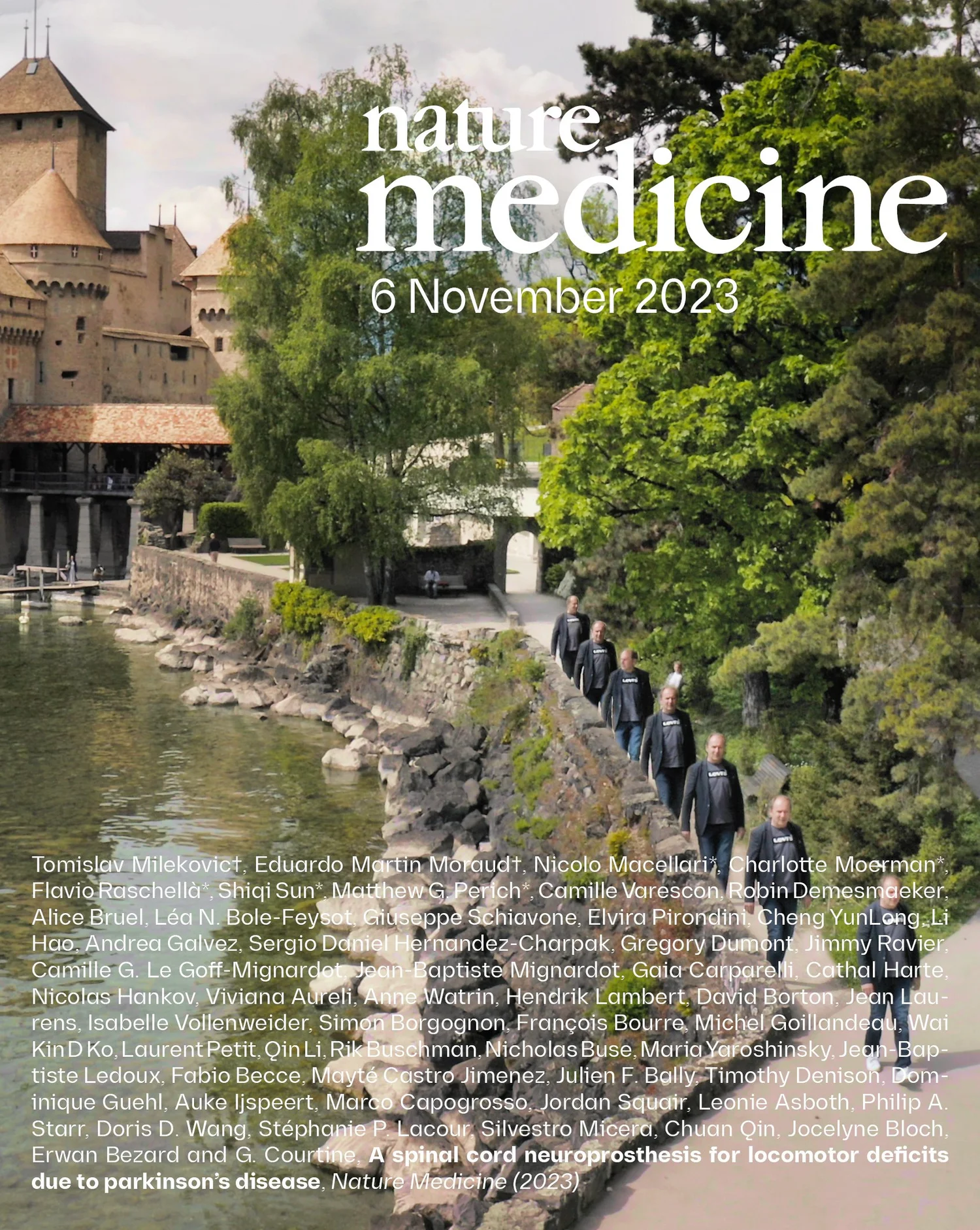
A spinal cord neuroprosthesis for locomotor deficits due to Parkinson’s disease — Nature Medicine.

2022

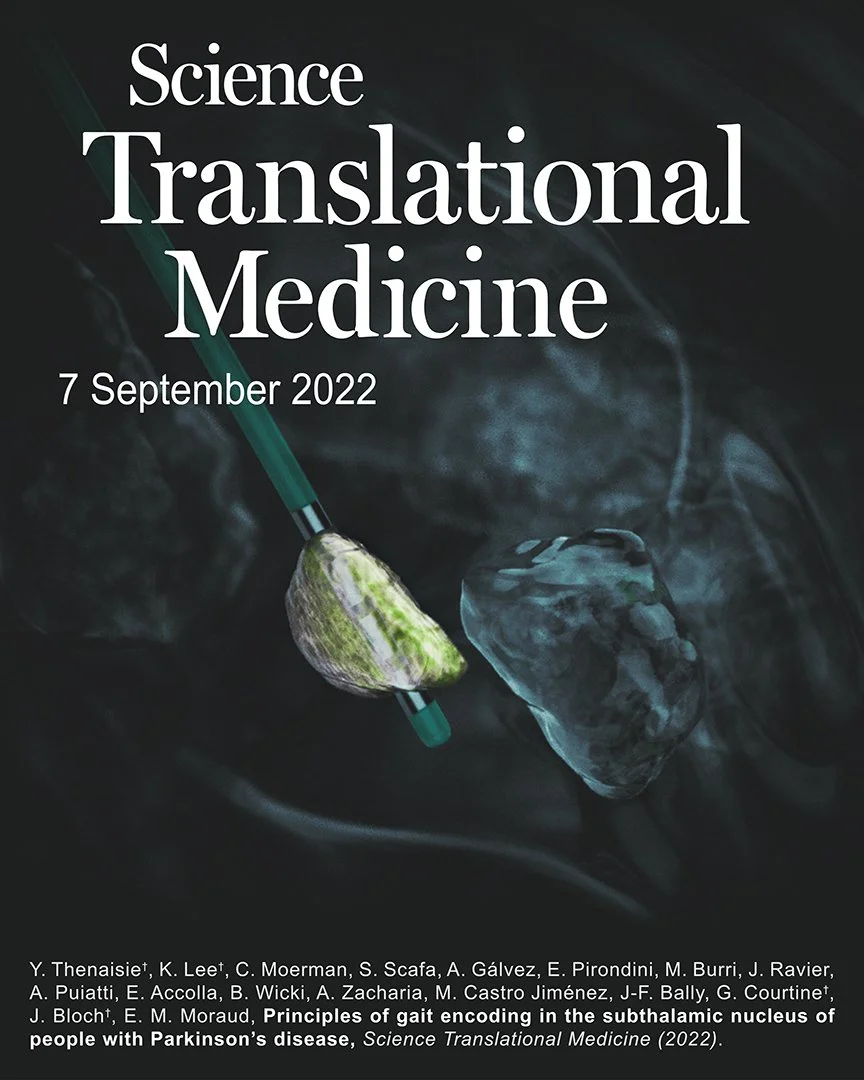
Principles of gait encoding in the subthalamic nucleus — Science Translational Medicine.

Loop

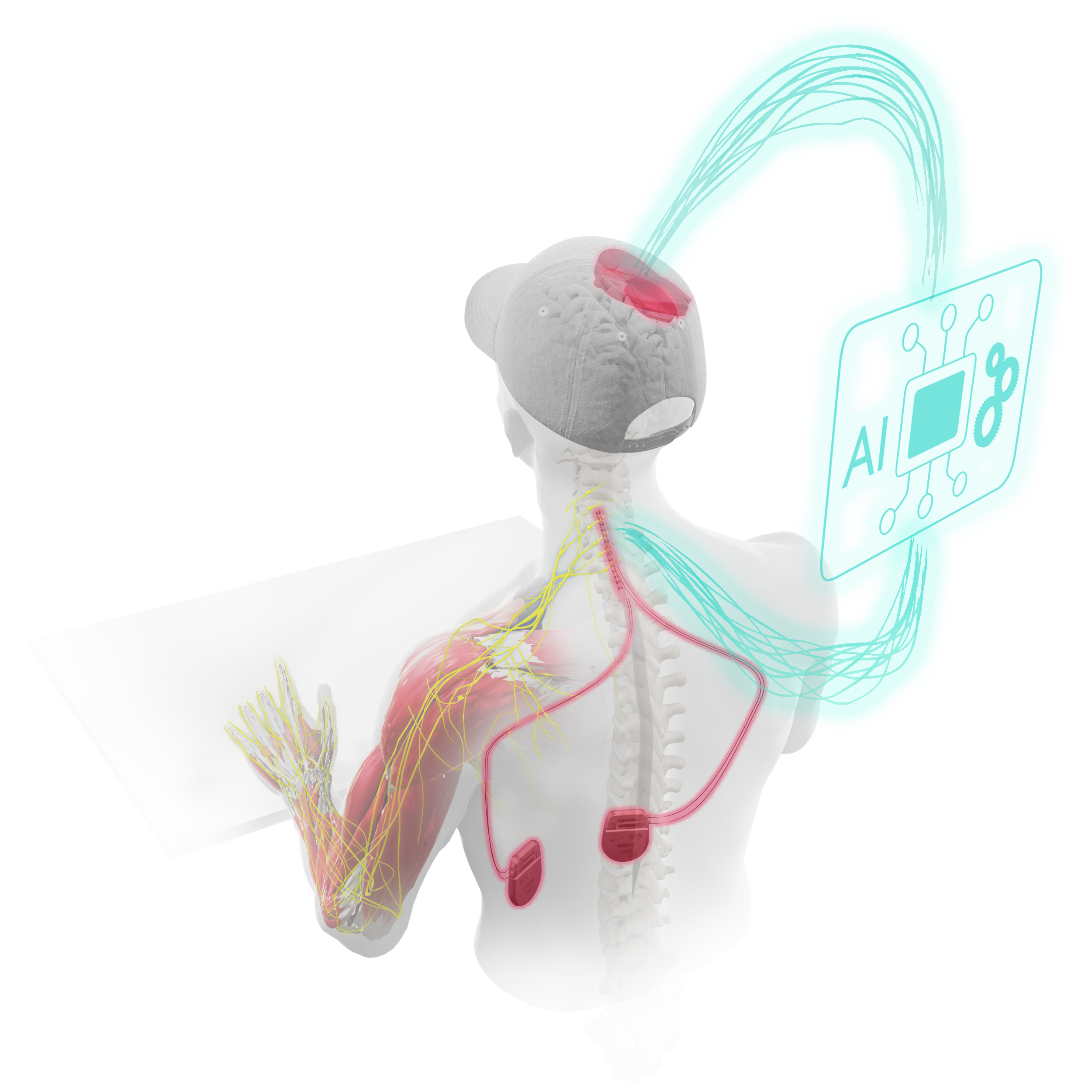
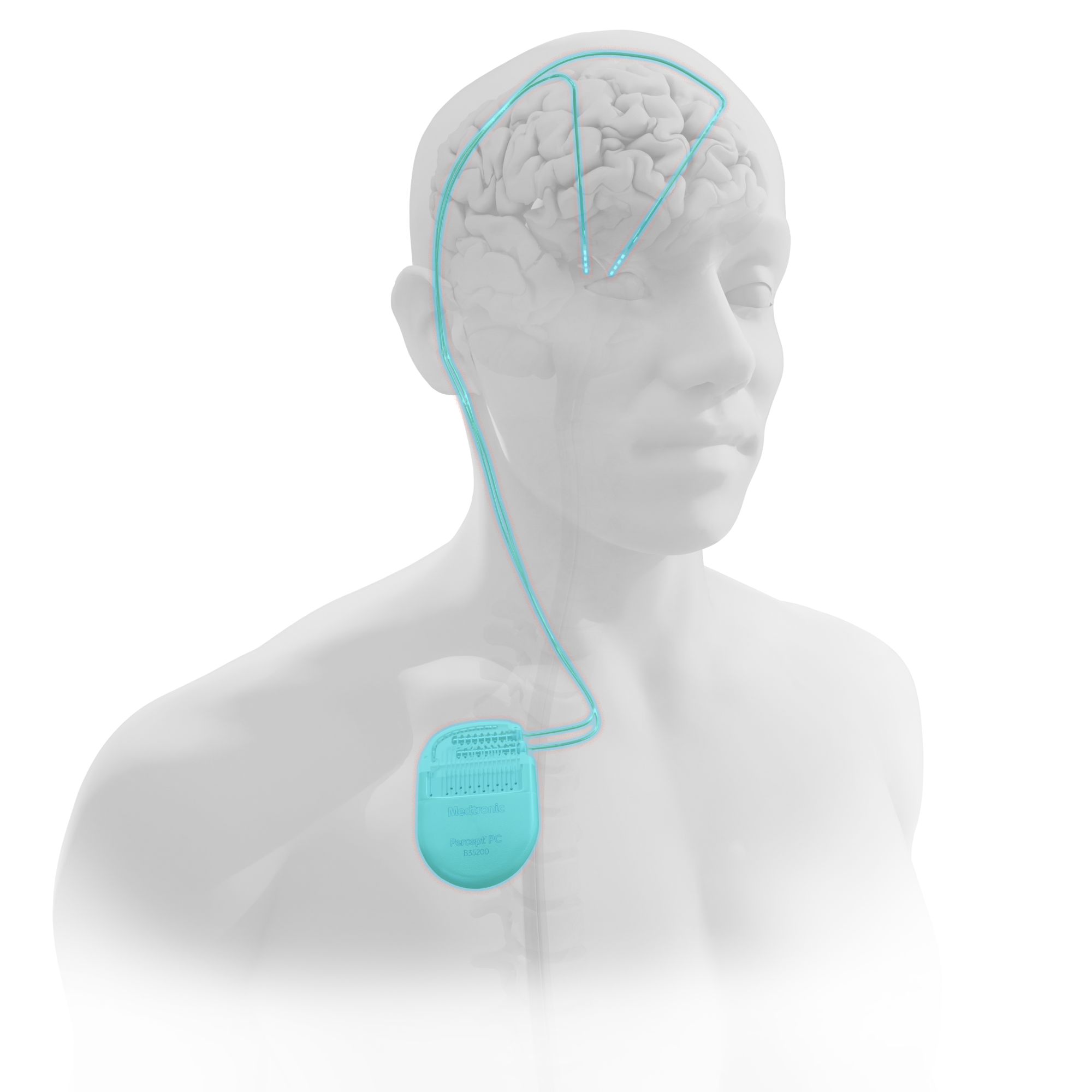
Stimulation adapted in real time to the patient’s neural and motor state.

Illustration of an implanted recording and stimulation system

Research programme

Gait and balance

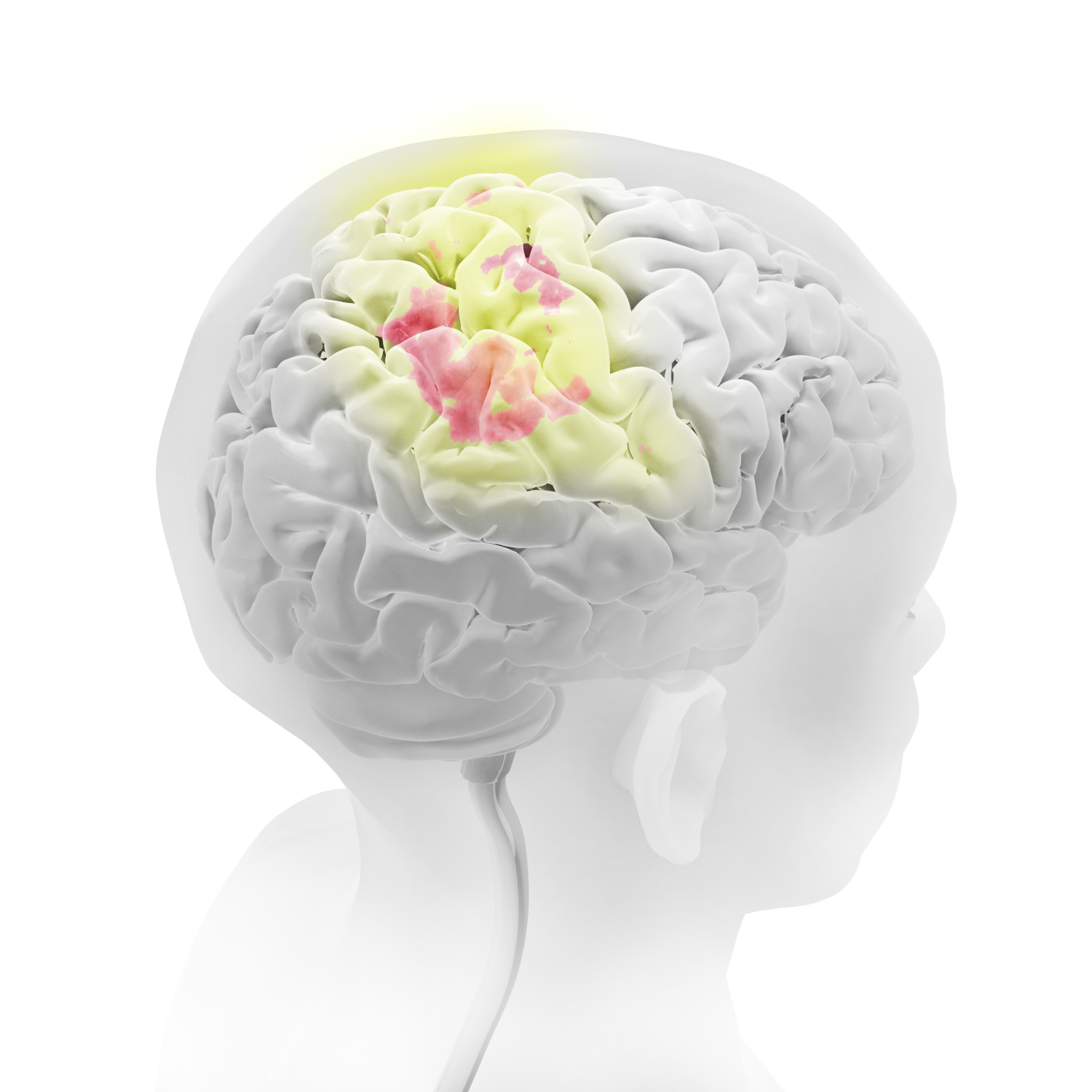
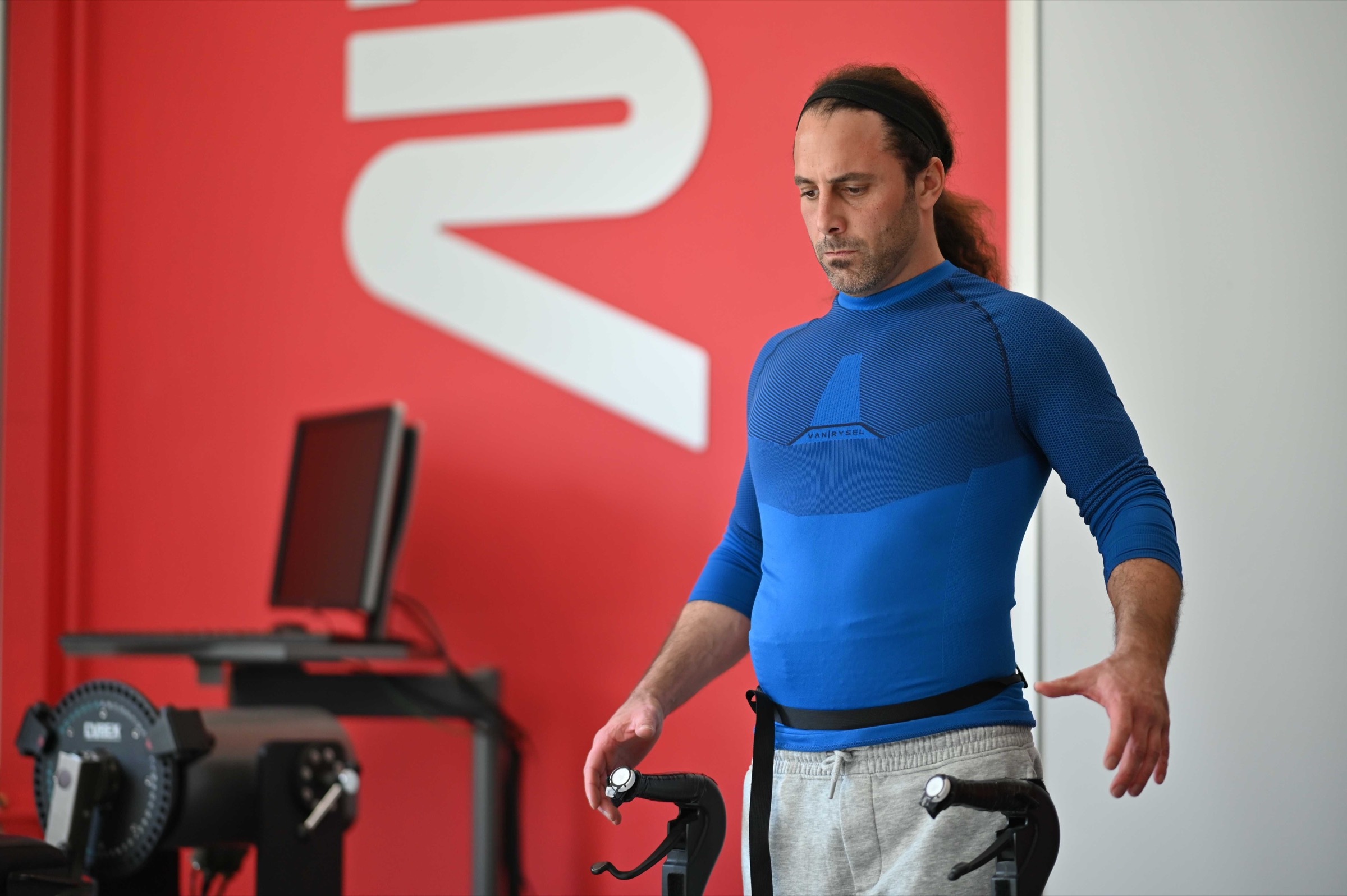
Our research programme aims to alleviate gait and balance deficits in people with Parkinson’s disease. To achieve this, we are decoding the dynamics of brain and spinal circuits during movement execution.

We combine high-resolution wireless monitoring of whole-body movement in ecological conditions with recording of multiple brain regions, in order to map neural and motor states during activities of daily living. The objective is to translate this understanding into closed-loop control of TESS protocols that alleviate gait and balance deficits.

How it works

  1. Wireless monitoring of whole-body movement in everyday conditions
  2. Recordings from multiple brain regions during those same activities
  3. Closed-loop TESS protocols that alleviate gait and balance deficits
Evidence

Related publications

Every result behind this programme was peer-reviewed before it reached this page.

Conference contributions

Clinical trials

Join our waiting list

Register as a candidate to be contacted if you are eligible for one of our ongoing or upcoming studies.